The Langkawi mangrove tour is one of those rare travel experiences that actually lives up to its reputation. We've been running these tours since 2014, and every single trip still surprises us with something — a hornbill landing close to the boat, an eagle that swoops lower than usual, a group of monkeys at the cave entrance. If you're wondering what to expect before you climb aboard, this guide covers everything.
1. Getting to Kilim Jetty
All FBO Langkawi tours depart from Kilim Jetty — the gateway to Kilim Karst Geoforest Park on the northeast coast of Langkawi island. It's about a 20–30 minute drive from most hotels and the main towns of Kuah and Pantai Cenang.
The easiest way to get here is by Grab (Malaysia's ride-hailing app) or taxi. We recommend arriving 10–15 minutes early. There are some small food stalls at the jetty if you want a light breakfast before departure — most tours leave between 7am and 10am, and the morning light is genuinely spectacular on the water.
2. The Mangrove River Cruise
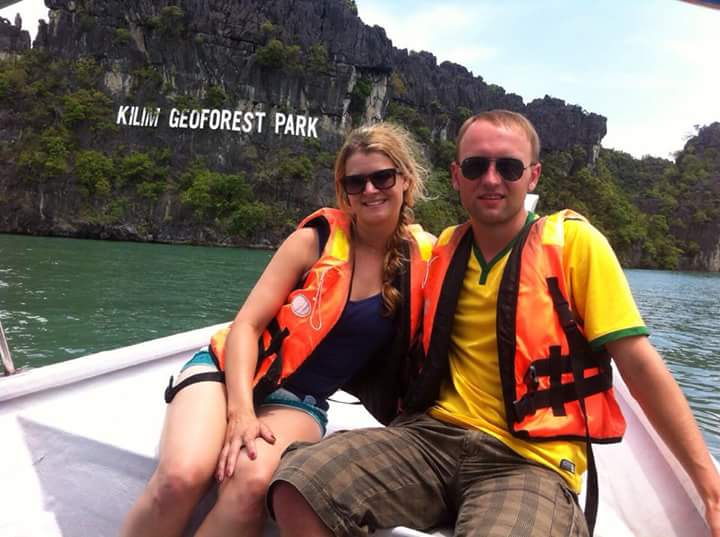
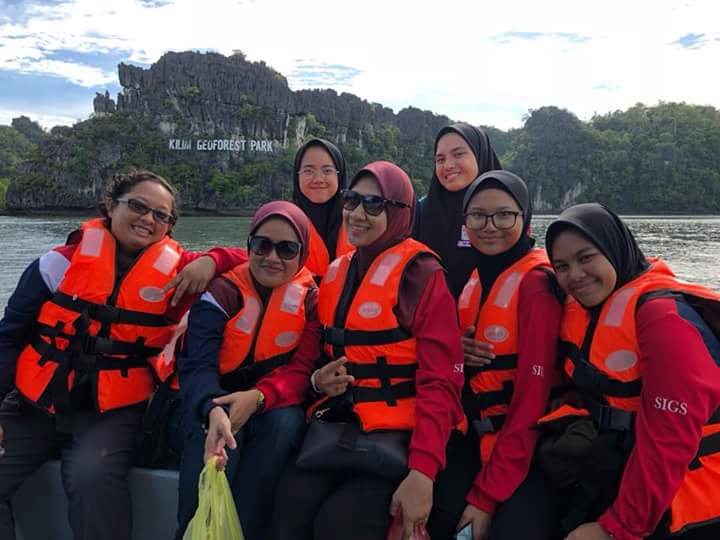
The tour begins the moment your boat pulls away from the jetty. The first thing you'll notice is the silence — broken only by birdsong and the gentle hum of the engine. You're entering the Kilim Karst Geoforest Park, a UNESCO World Geopark listed for its extraordinary limestone karst formations that rise dramatically from the water.
The mangrove ecosystem here is one of the most biodiverse in Southeast Asia. As you cruise slowly through the channels, your guide will point out what to look for: hornbills perched high in the canopy, monitor lizards sunning on exposed roots, mudskippers skipping across the mud at low tide, and if you're lucky, a sea eagle circling overhead before you even reach the feeding spot.
The mangrove trees themselves are extraordinary — their tangled root systems filter the water and protect the coastline, and they've been doing so for millions of years. Your guide will explain the ecology as you go. This isn't a rushed tour; there's time to look, to photograph, to simply sit with it.
3. Eagle Feeding at Open Sea
This is the moment most guests talk about for years afterwards. As the boat moves out from the sheltered channels into the open Andaman Sea, your guide takes out a bucket of fish. He throws a piece into the air — and within seconds, a Brahminy kite eagle appears from nowhere and dives to snatch it from the water's surface.
Then another. And another. Within minutes you're surrounded by eagles sweeping low over the boat, their rust-red wings catching the light, their yellow eyes locked on the water below. It's a spectacle that no photograph fully captures — you have to be there.
Photography tip: Use burst mode on your camera or phone. The eagles move fast. Morning light (earlier departures) gives the best golden-hour quality for photos. Position yourself toward the front or sides of the boat for the clearest shots.
4. Bat Cave & Crocodile Cave
The boat navigates back into the karst channels and pulls up to a limestone cliff face — the entrance to the bat cave. You step off the boat onto a wooden platform and enter a towering cave chamber. The ceiling is alive with thousands of fruit bats, hanging in dense clusters, shuffling, squeaking. The sound is remarkable. The scale is humbling.
Your guide will explain the species, the habits, and the role these bats play in the local ecosystem — they're pollinators and seed dispersers for the forest above. Don't worry: the bats are not interested in you. They're busy sleeping.
The crocodile cave nearby is smaller and quieter — named for its history rather than its current residents (no crocodiles live there today, though monitor lizards often lurk on the rocks outside). It's worth a quick stop for the cave formations and the stories that come with it.
5. Fish Farm Visit
One of the more unexpectedly fun stops on the tour is the floating fish farm — a series of wooden platforms and cages anchored in the calm estuary. Here you get to hand-feed the fish and watch them swarm below you in a writhing mass of fins and scales.
Your guide will explain how the farm works — the species they raise (grouper, snapper, and sea bass are common), the sustainable practices used, and how this form of aquaculture fits into the local economy. It's educational without being dry, and the fish feeding itself is genuinely joyful — especially for children.
6. Beach Stop
Most tours include a 30-minute stop at one of Langkawi's beautiful beaches — commonly Tanjung Rhu or Beras Basah island. Both have powder-white sand and water so clear you can see the bottom at 2 metres depth.
This is your time to swim, walk the shoreline, or simply sit and look out at the Andaman Sea with the limestone karsts of Thailand visible on the horizon on a clear day. It's a peaceful, uncrowded moment that forms a perfect contrast to the energy of the eagle feeding earlier.
7. What to Bring
- Sunscreen — you'll be on open water and the tropical sun is intense, even on cloudy days
- A hat — for the open-sea sections
- Light, comfortable clothing — quick-dry fabrics are ideal
- Sandals or water shoes — you may step onto wet platforms at the fish farm and cave stops
- A camera or charged phone — the eagles alone are worth it
- Water and light snacks — water is usually provided, but bring extra if you run hot
- Motion sickness tablets — the open-sea sections can be choppy; take these before departure if you're prone to seasickness
8. Tips for the Best Experience
- Book an early departure — 7am or 8am tours have calmer seas, better light for photography, and the eagles are more active in the morning
- Sit toward the front of the boat — you'll get an unobstructed view during the eagle feeding and mangrove cruise
- Tell your guide about any mobility concerns — the cave stops involve stepping from the boat, but we can accommodate most needs with advance notice
- The tour is suitable for all ages — we've welcomed guests from 3 to 83 years old. Life jackets are provided and non-negotiable on open water
- Don't touch the wildlife — watch, photograph, enjoy, but keep the ecosystem as you found it